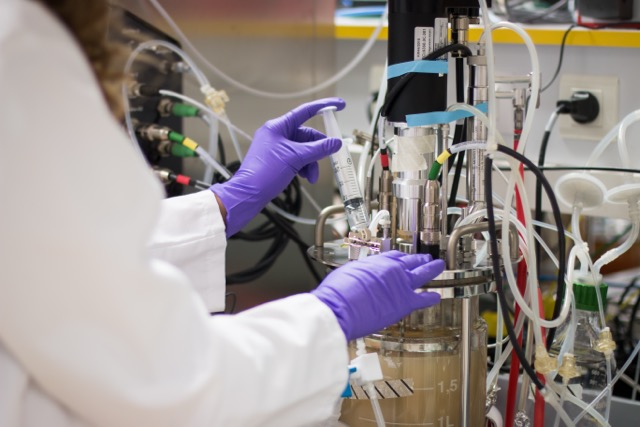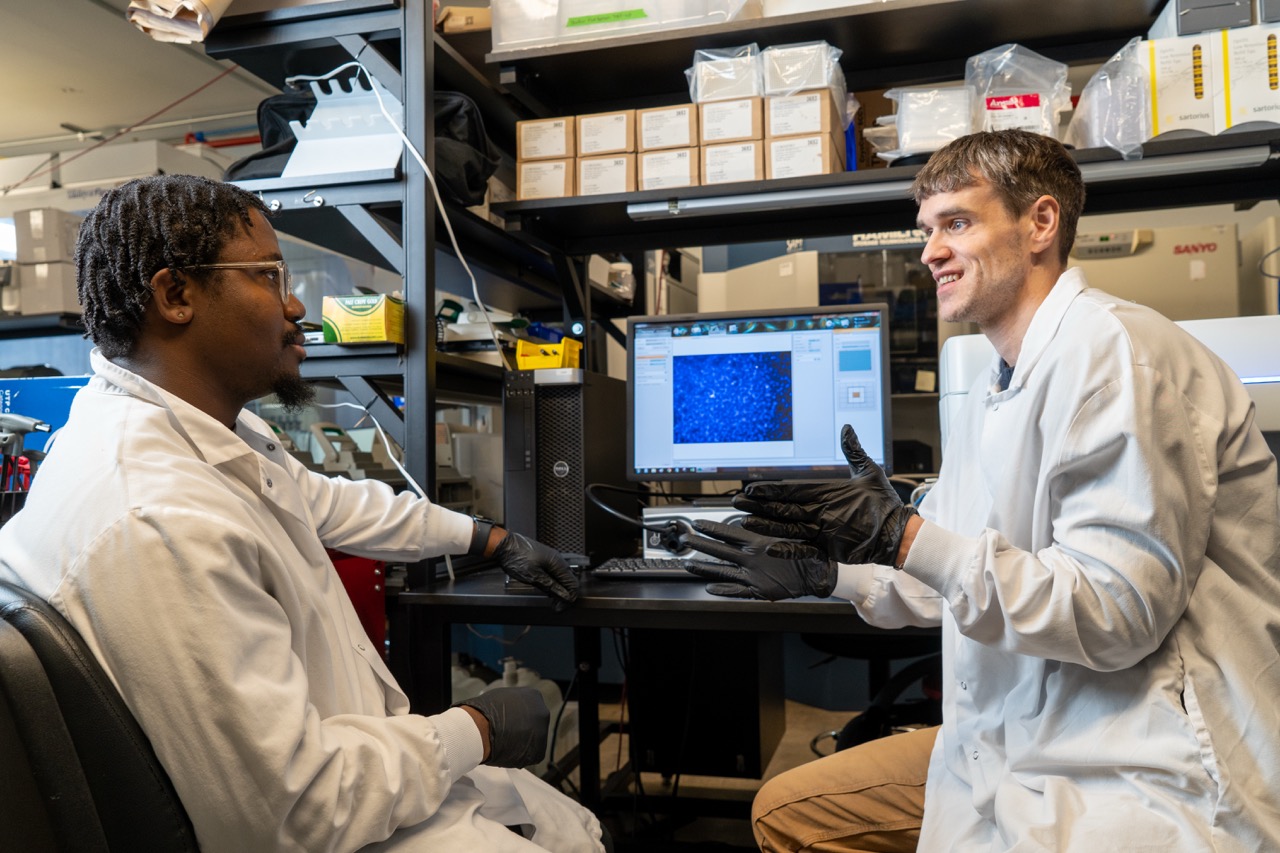
Bioreactors are a powerful tool for controlling fermentation conditions, keeping the microbes growing and in an optimal state. As Maya shared last week on our blog, the bioreactors are set up to measure and manipulate parameters such as pH, oxygen levels, and temperature. Their capacity to give certain readouts about what is in the broth, however, is limited.
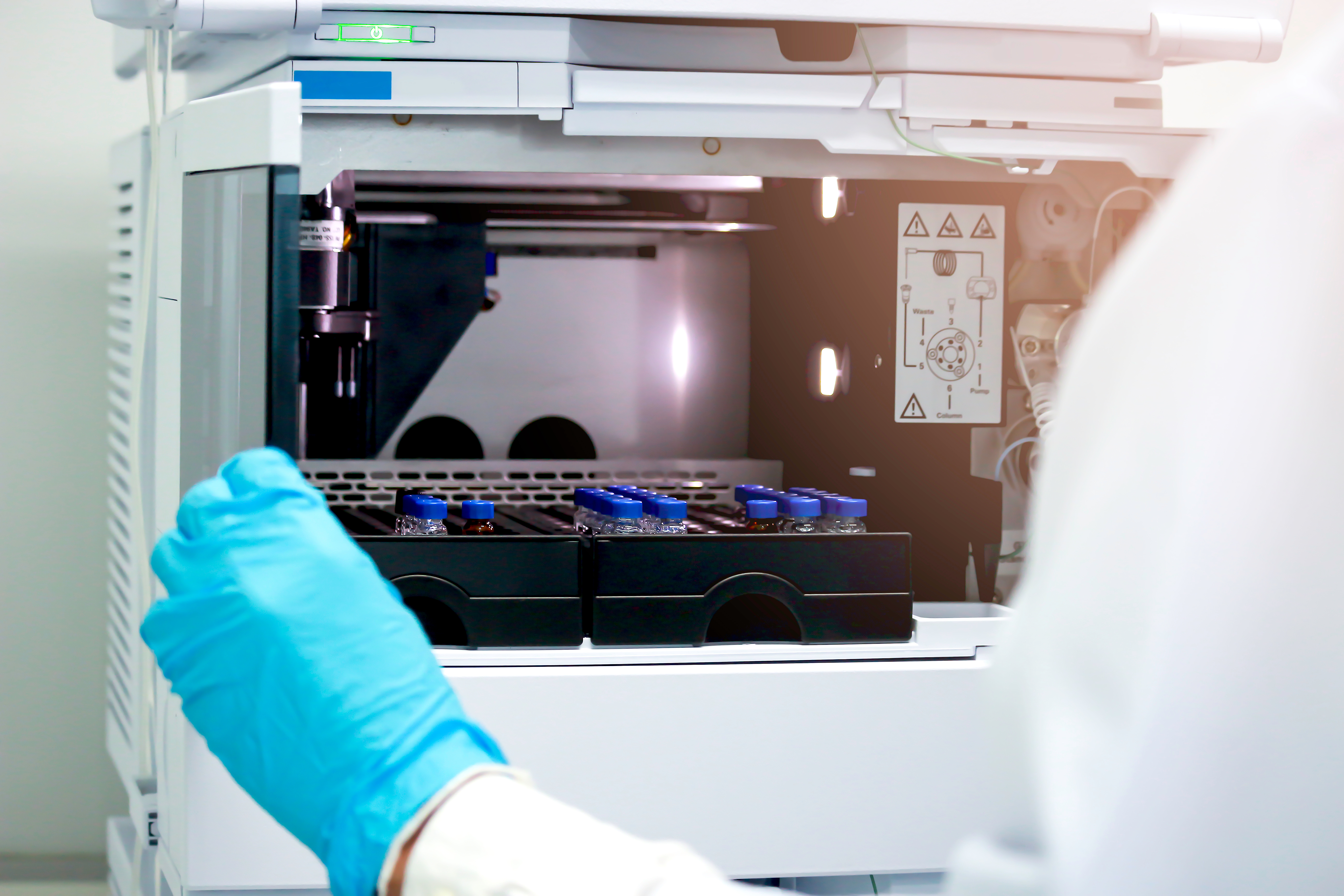
In our lab, we turn to analytical chemistry, specifically liquid chromatography, during all stages of the pipeline from bioprocess development through finished product QC. There are many types of liquid chromatography, but the core principles and goals are the same: to separate certain analytes (the things we’re interested in measuring) from everything else, and to measure the concentration of them.
To do this, we collect a sample, process it, and run it through the liquid chromatography instrument. On the instrument, the sample flows through a column at parameters specific to what we’re trying to measure. Different mobile phases, pressures, and flow rates will cause molecules in the sample to flow through the column at different rates, and the time the analytes come off of the column is a specific stamp that tells us what it is, and the size of the signal tells us how much of it there is.
Knowing what is in the sample, or what is lacking in the sample can tell us a lot!
For example, while monitoring the fermentation, we can see when the cells run out of sugar. Or maybe they don’t use up all the sugar, which might indicate they run out of another critical element first. Knowing their metabolism and being able to track the growth in this way helps us gain a better understanding of the process we’re creating, which in turn makes it more reproducible and robust. We may also want to measure specific compounds produced by the microbes during fermentation.
The more data, the better, so we collect measurements at every step of the process. This helps us understand how our ingredients move through the upstream and downstream processing phases. This attention to detail continues as we scale up with our manufacturing partners, and assess how well our fermentation process translates from our lab to commercial-scale manufacturing. These measurements help us track selected compounds through processing and assessing consistency as we scale up manufacturing. Analytical chemistry complements the functional assays we use to assess ingredient efficacy. As Maya discussed last week, after growing the microbial strains that comprise our ingredients, the fermentation broth is spray dried into its final, free-flowing, shelf stable powder form. We measure the final powder once more to ensure the entire process behaved as expected and account for any losses along the way. Keeping a close watch on our processes gives us confidence in our final product, and allows us to ensure our ingredients are always held to a high standard.