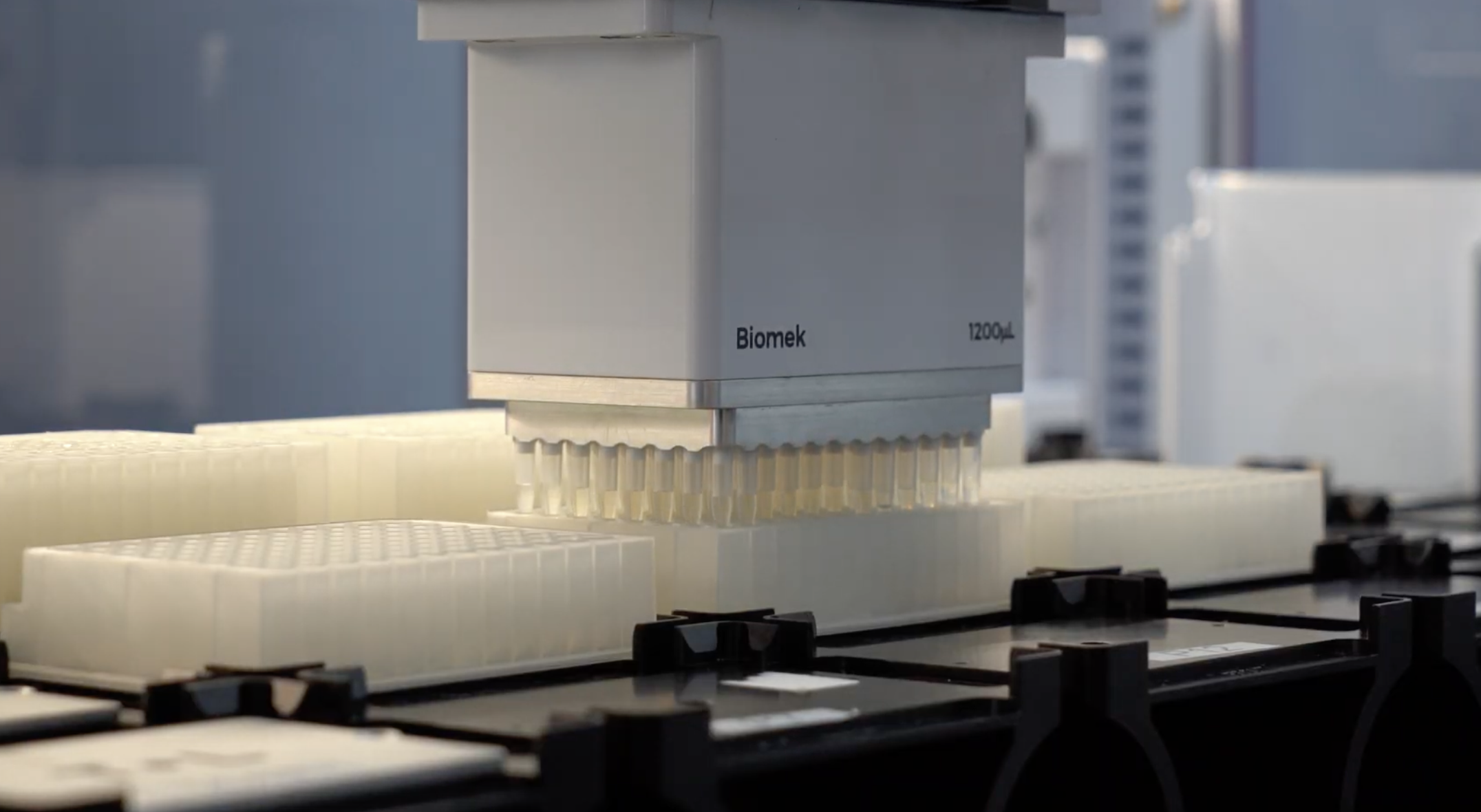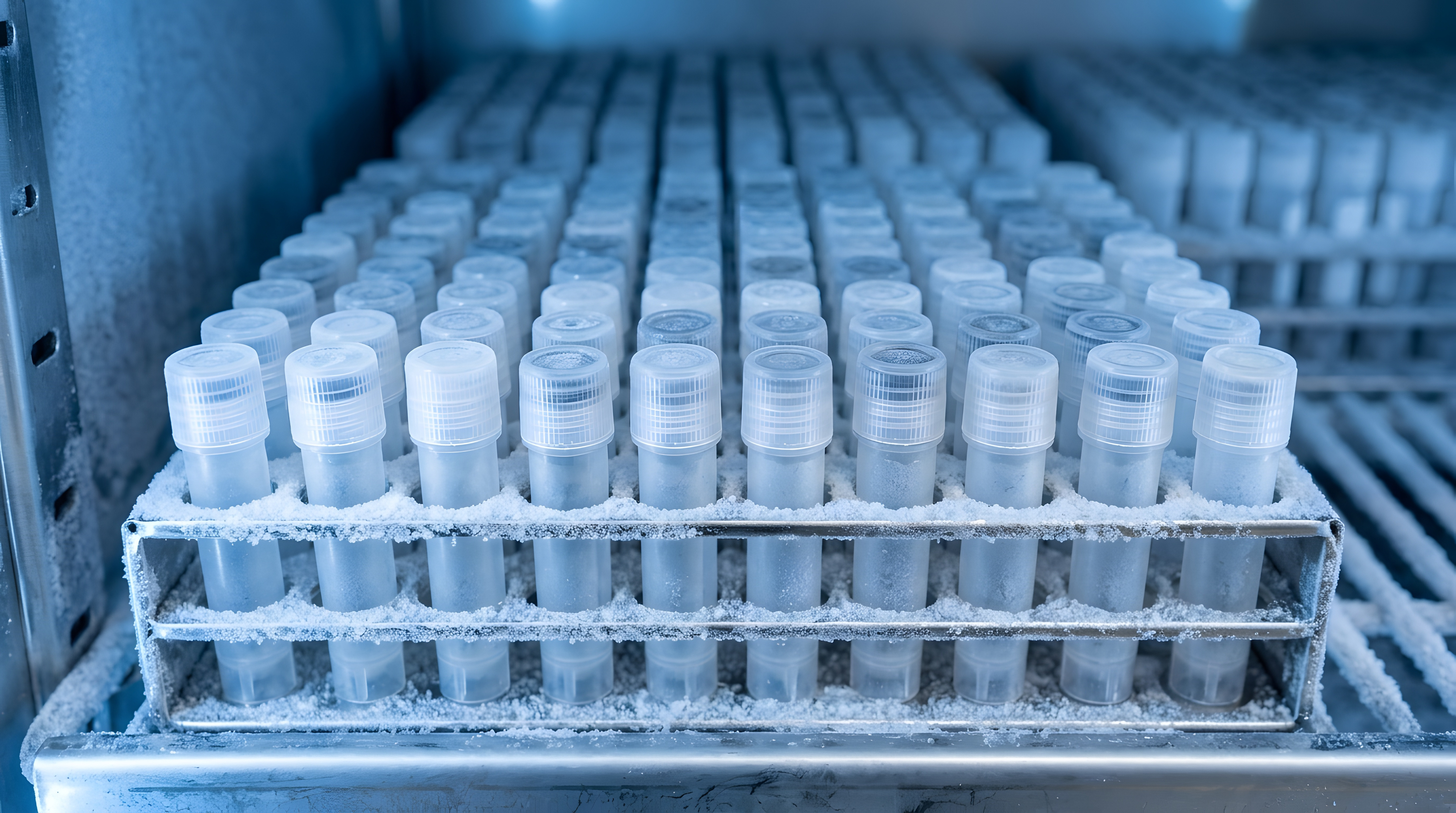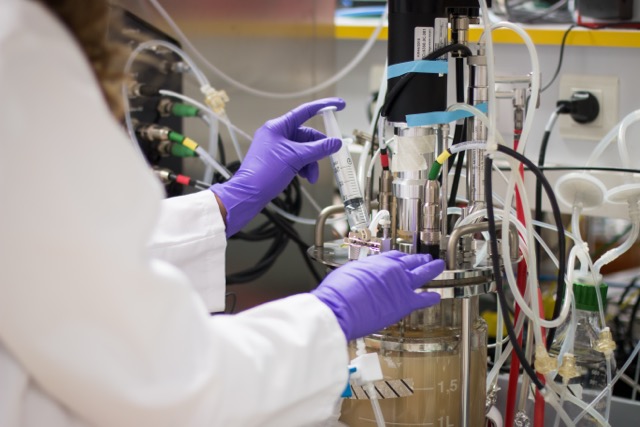
Last week, Corentin compared a bioreactor to an office with good HVAC and great snacks - something that allows the employees (microbes) inside to do their best work. On the benchtop, my job is to fine-tune that office, adjusting the temperature, nutrients, and air until our microbes do their best work. The two machines directly responsible for this process are the bioreactors, where we grow the microbes in a precisely-controlled fermentation environment, and the spray dryer, where we turn the liquid fermented material into a shelf-stable powder.
Think of a bioreactor as a climate-controlled home built for microbes. Inside this sealed vessel, we set the perfect environment our strains need to thrive and produce our ingredients. A slight shift in the environment can impact how fast the microbes grow and the metabolites they produce. The main physical parameters we control are temperature, pH, and dissolved oxygen (how much oxygen is provided in the liquid through agitation and sparging air). Controlling each of these is vital to ensuring the microbes consistently produce efficacious Superculture® ingredients. And since every strain has its own preferred temperature, pH, and oxygen level, sensors in each bioreactor continuously measure these conditions, and the system adjusts them automatically during the run. Throughout the process, we draw small samples to measure how the microbes are doing.
When sampling the bioreactors, there are a couple of measurements that give us insight into how the microbes are growing. A few milliliters of the ongoing fermentation can tell us how many live cells are in the broth and how much growth is taking place, how fast the cells consume the sugar, and whether the fermentation is progressing as we’d expect. We measure growth by plating a small sample on a plate and counting how many colonies grow. We measure glucose uptake and other metabolites using our HPLC (analytical instrument), which tells us how active the cells are and when they run out of food. Lastly, we measure the success of the fermentation based on ingredient-specific targets. These results guide our next steps, and we continue refining the fermentation conditions until we optimize those that produce our ingredient most efficiently.
Sterility is one of the most important aspects to keep in mind throughout fermentation. One stray microbe can outcompete the microbe we intended to grow and make an entire week’s worth of data collection unusable. To maintain sterility, we autoclave the reactors at the start of the run, sample carefully using sterile syringes, spray ethanol before and after sampling to keep our surfaces clean, and work in a biosafety cabinet (an enclosed workspace that ensures a sterile internal area) to plate our samples in agar. We closely examine the plated samples to confirm each fermentation is clean, meaning only our strain grew without any contaminants. We do this by confirming that every colony has the same form and structure that we expect from our strain.
The fermentation in our bioreactor happens in a liquid state, but our Superculture® ingredients are flowable powders that can easily be incorporated into any food or supplement end product. To get there, we use a spray dryer, which turns liquid into fine powder. The broth is sprayed as a mist into a chamber of flowing hot air. Here, the water particles in the misted broth evaporate, and the solid particles remain. Particles that are too large fall into a waste bottle, and particles that are too small are trapped in the outlet filter. Each particle of our Superculture® ingredients must be a consistent, fine, flowable size, so we optimize our spray drying process to obtain particles of the right size and get more usable powder.
To get the most amount of usable powder, we control a few settings on the spray dryer to cater to different fermentations. These settings are the inlet temperature (how hot the chamber is), feed rate (how fast the broth is being fed into the spray dryer), and spray gas flow (using compressed air to atomize the broth). We determine the right settings for each fermentation by first testing a range of them at high and low levels in different combinations to find the condition that yields the highest powder recovery.
This process yields consistent, free-flowing powder, which makes it easy for our partners to dose accurately and blend evenly. We reproduce the spray drying conditions several times in our lab before scaling up to get consistent results in commercial production.