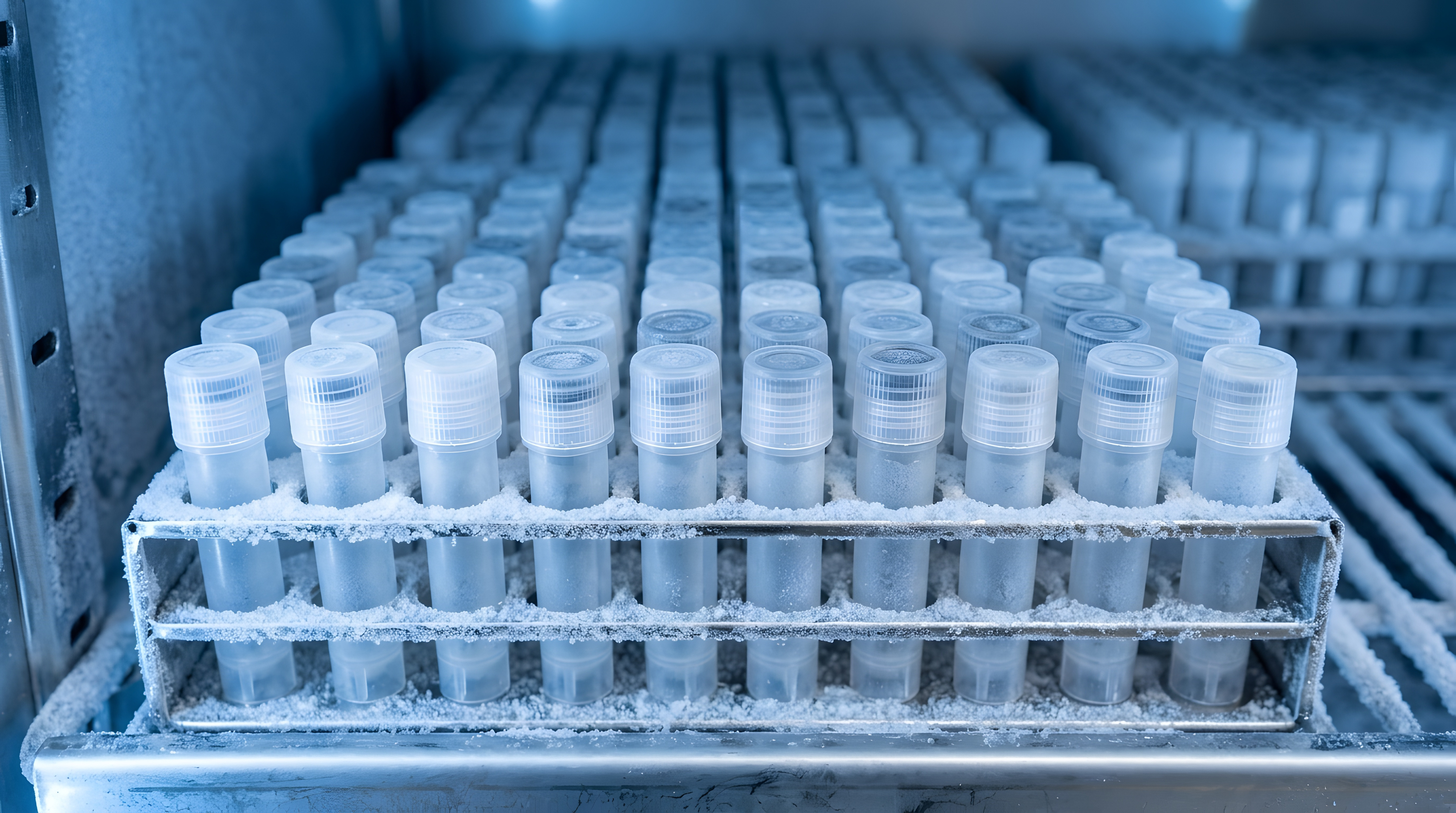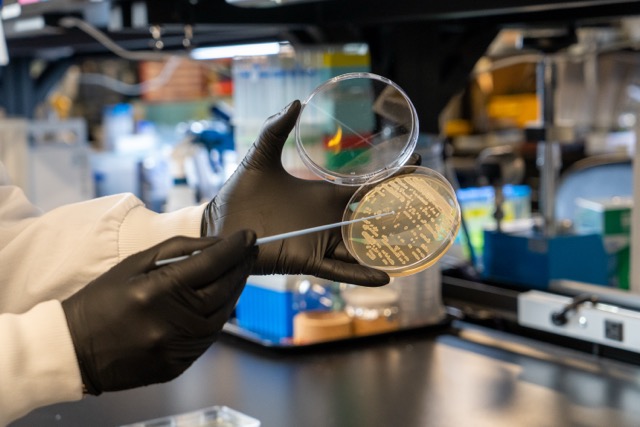
By building one of the world’s largest and most diverse biobanks, we’ve given ourselves thousands of microbial candidates with which to develop Superculture® ingredients. Identifying candidates with exceptional functionalities to make a measurable impact on a specific health need requires extensive high-throughput screening. We accomplish this through the power of high-throughput fermentation, purpose-built screening assays, and complex data analysis pipelines.
Fermenting thousands of microbial candidates
Prior to fermenting thousands of microbial candidates, we first research target pathways and microbial classes that can lead us to our desired ingredient. Then we leverage that knowledge to perform high throughput fermentation.
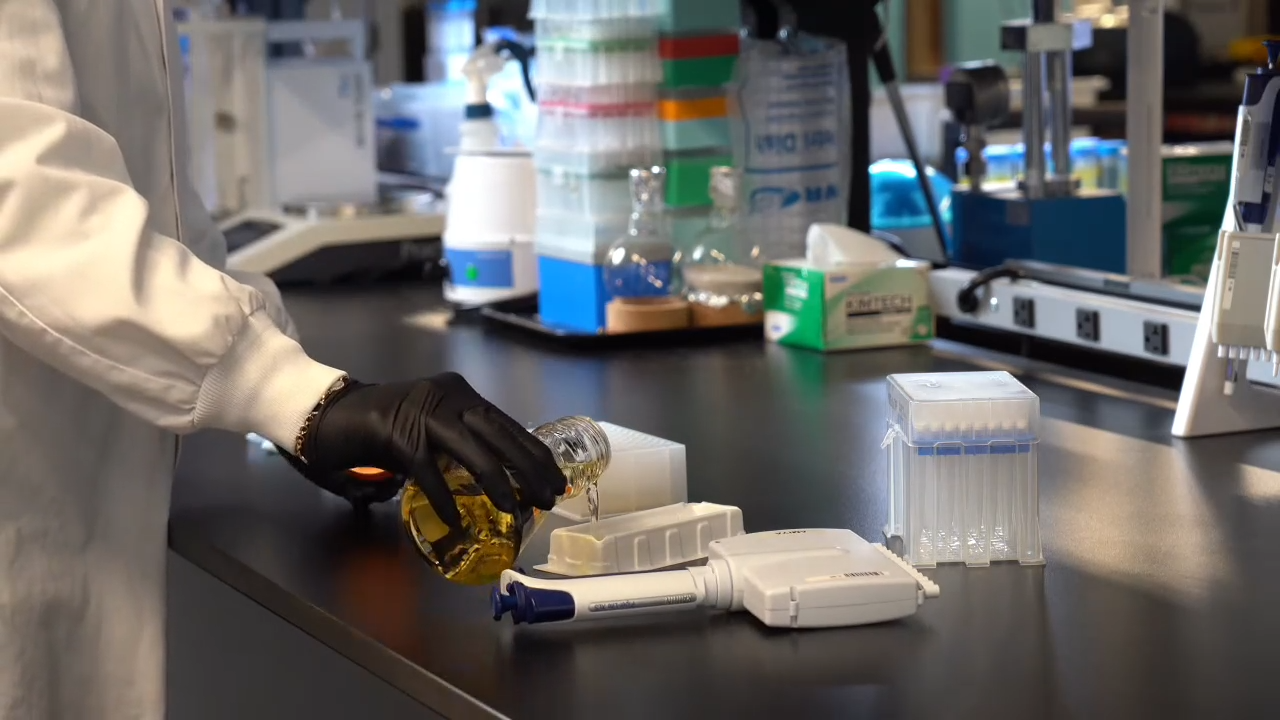
Using high-throughput fermentation, we can ferment a variety of strains simultaneously. High-throughput fermentation at Kingdom consists of using microtiter plates to perform parallel processing of a multitude of strains with the help of automation devices for creating and inoculating the plates used in the fermentation process, and recording the required growth metric for the plates. This allows for more direct head-to-head comparisons and a quicker turnaround on which strains from our biobank are potential hits for a particular ingredient target. Once the microbial material is generated, we measure the effectiveness of each one using either a cell-based assay or an analytical assay. For example, during the development of Superculture® Pet Immune (SPI), we screened for indole production by varying fermentation nutrients and growth conditions, not only which strains from our biobank were tested.
Building assays for each target
Kingdom has developed several assays for high-throughput characterization suitable for the screening process. During the development of Superculture® Pet Oral (SPO), we developed several cell-based assays to determine the effectiveness of thousands of strains to disrupt oral biofilms and reduce the production of bad breath compounds.
Alongside cell-based model assays, Kingdom uses optical assays, such as fluorescent and colorimetric methods, as well as analytical chemistry techniques to further characterize our ingredients. During the development of SPI, we analyzed over 10,000 samples on analytical chemistry instruments. Coalescing all of this information requires a robust data analysis pipeline.
Turning thousands of measurements into decisions
The data analysis pipeline for screening is designed to handle large quantities of data from different assays and consolidate the results so that our scientists can identify the best strain(s) for a particular ingredient across many variables.
For instance, any sample analyzed by analytical chemistry across many analytes also has other corresponding measurements, such as growth or associated controls, and much metadata. The data must be consistently and properly recorded and combined to support accurate quantification throughout the screening phase.
The outputs include figures that are used for quality control of the assays, visualizations of experimental results, and data frames that are formatted and saved for further analysis at the end of a screening campaign. All together, our team can compare measurements in a robust manner across time points, fermentation conditions, and strains. This data allows our team to make data-driven decisions about which strain(s) can form the foundation for each Superculture® ingredient.
Collaborative ingredient development
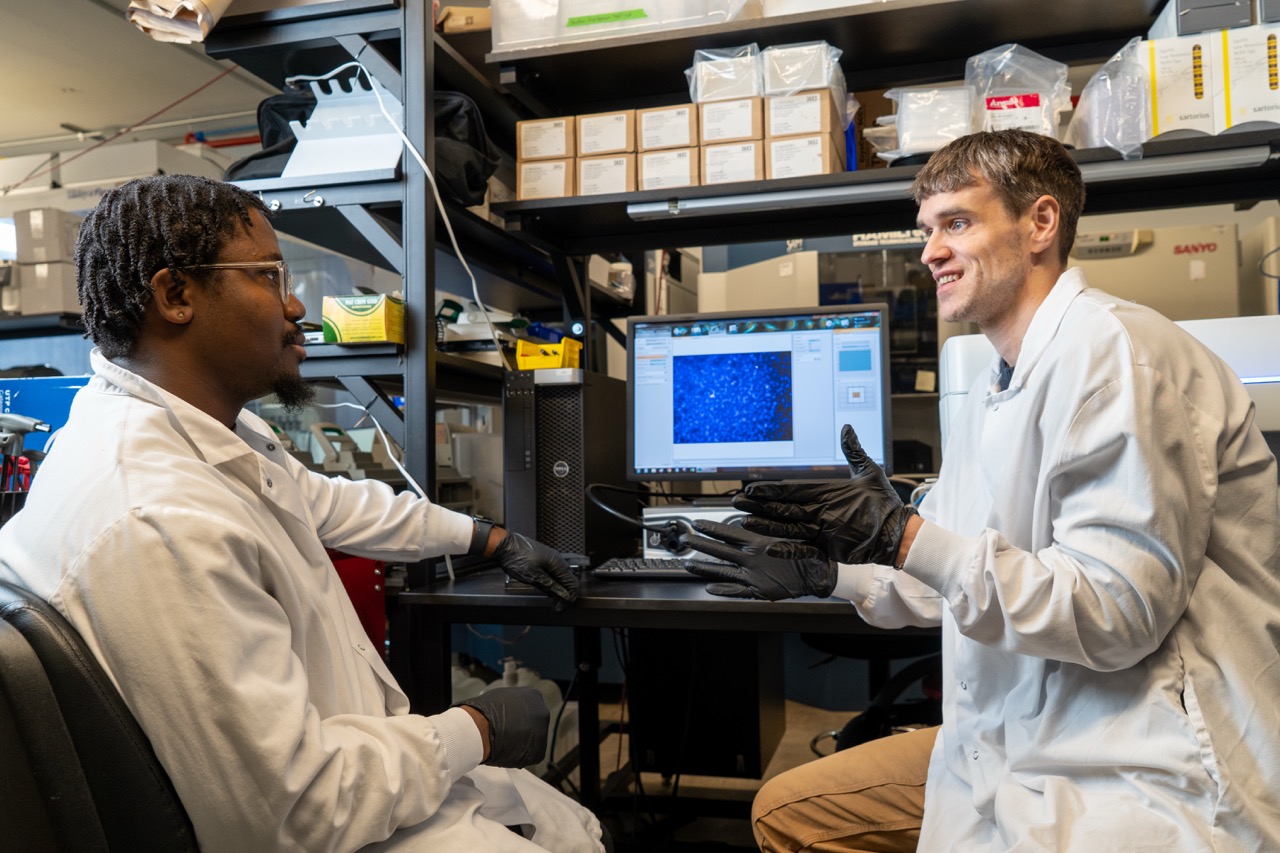
Running a screen end-to-end is a complex, multi-step process, which requires several team members to work together in close coordination. One team member needs to ferment all of the samples from the biobank, and then collect and process them for testing. Other team members test run samples in the relevant assays. Yet another team member analyzes and collates the data across assays. The ability of everyone on our team to collaborate is essential to execute smoothly and robustly on high-throughput screens.