Key takeaway
Superculture® Pet Immune is the first pet nutrition ingredient designed around a specific class of bioavailable, microbiome-derived compounds, indoles. They act primarily through the aryl hydrocarbon receptor (AhR) to support skin barrier function and immune response. Two placebo-controlled clinical trials in dogs have now confirmed what the mechanistic design predicted: significant reduction in occasional itching in 14-28 days, visible improvement in skin and coat quality after 14 days, and favorable shifts in gut microbiome composition.
This post builds on the first two of this series, on clinical validation and ingredient development, and walks through the design rationale and mechanism behind Superculture® Pet Immune's itching and skin & coat health impacts.
Clinical validation in dogs
In a double-blinded, placebo-controlled canine study, healthy dogs presenting with subclinical but elevated itching behavior received either Superculture® Pet Immune, delivered as a powder meal topper split across two meals, or a placebo over a four-week treatment period. At Day 28, dogs receiving the ingredient showed a statistically significant reduction in itching behavior by 20%, measured objectively with a wearable activity monitor.
This finding was validated by a human-perceptible impact: human-perceived itching fell 27% in 28 days, measured by the Pruritus Visual Analog Scale (PVAS), with improvements visible in as little as 14 days. That's more than 2.5x the itch reduction reported for any other clinically studied biotic. There was no change in either itching behavior or PVAS score in the placebo group. Superculture® Pet Immune also delivered visible coat improvement in 14 days, while none of the placebo dogs showed improvement.
This research in dogs is detailed in Sordillo et al. (Animals, 2025).
A second, independent randomized, double-blind, placebo-controlled study followed a different group of healthy dogs over 91 days, with coat quality scored by trained evaluators. Superculture® Pet Immune significantly improved coat softness and glossiness at Days 56 and 91, while the placebo group did not show improvements at any time point, evidence that the ingredient’s delivery of skin and coat benefits is reproducible and sustained across two distinct populations. These findings were presented at the 2026 American College of Veterinary Internal Medicine Forum.
Why we designed around indoles
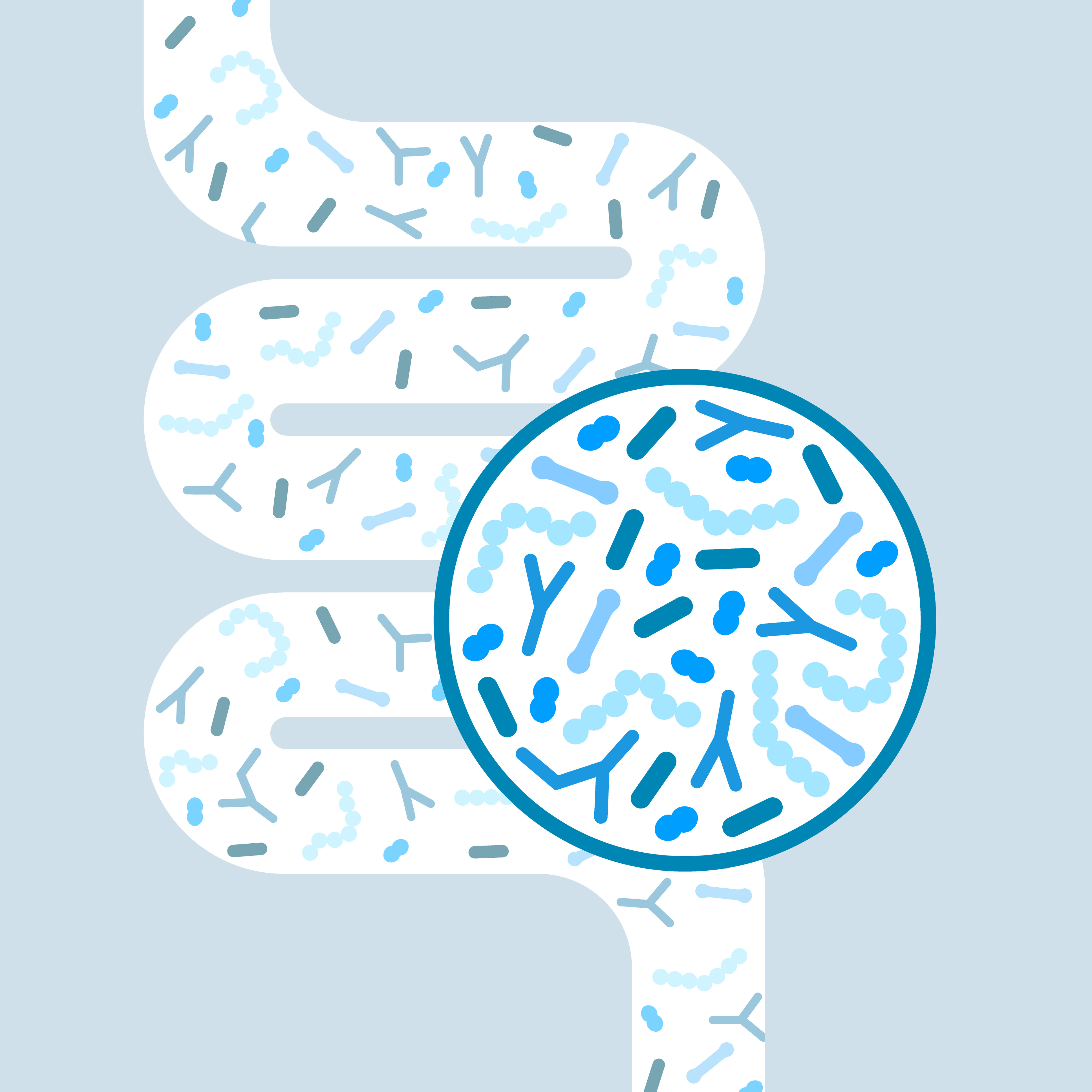
The skin and the gut are in constant conversation through the microbiome-immune axis: a dynamic, bidirectional communication network. Gut microorganisms regulate host immunity through microbial metabolites that bind host receptors at the epithelial interface. The immune system reciprocally influences microbiota composition through mucosal secretions and inflammatory tone. When the axis functions well, it maintains immune homeostasis and epithelial barrier integrity at both gut and distal tissues, including skin. When dysregulated, downstream effects manifest across multiple organ systems, including the skin.
A healthy gut microbiome produces a class of compounds called indoles, natural tryptophan-derived metabolites produced by a healthy gut microbiome. Indoles don't stay in the gut. They circulate systemically throughout the body, where they act as chemical messengers to tissues, including the skin.
The primary pathway: AhR
Indoles are activators of the aryl hydrocarbon receptor (AhR), a master regulator that helps coordinate immune balance, inflammation, and barrier function, with a well-characterized role in skin health across both human and veterinary literature. Two AhR-driven effects are especially relevant to skin and coat.
Barrier integrity. AhR activation reinforces the tight junctions between skin cells and supports IL-22–mediated epithelial defense, helping the skin maintain a resilient barrier.
Immune and inflammatory balance. AhR helps quiet the pro-inflammatory signaling, including cytokines like IFN-γ and TNF-α, that drives irritation and the urge to itch, supporting a healthy, balanced inflammatory response.
Confirming canine activation
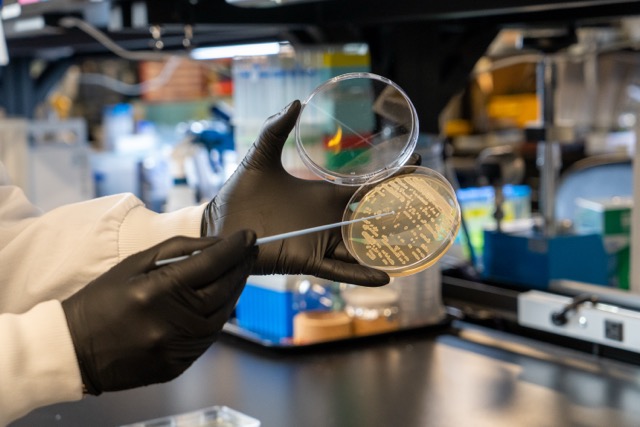
Because AhR can behave differently from one species to the next, we tested the ingredient in a canine cell line specifically. Superculture® Pet Immune activated canine AhR to 56% of the level produced by a strong reference activator, confirming it engages this pathway in dogs, not just in theory.
We then looked for the functional consequences of that activation. In a human peripheral blood cytokine assay, Superculture® Pet Immune fully suppressed the release of the pro-inflammatory cytokine IFN-γ and lowered TNF-α by about a third, the pattern you would expect from an ingredient that activates AhR.
Relating ingredient design to clinical outcome
Postbiotics are inherently complex ingredients, whose bioactivity is unlikely to be reducible to any single compound class. Our clinical studies measure outcomes, like reduced itching behavior and visible skin and coat improvements, but do not isolate the specific contribution of AhR activation or any individual indole to those outcomes. Attribution at that level is inherently difficult for ingredients of this kind. The ISAPP expert consensus further notes that it is not necessary to isolate the mechanistic contribution of each individual component to a demonstrated health benefit. Our approach is therefore mechanism-centered in design and in vitro screening, but benefit-focused in clinical validation:
- A bioavailable, microbiome-derived class of actives (indoles) with known systemic distribution and tissue-level activity at physiologic concentrations.
- A companion animal-specific mechanism, confirmed experimentally in canine cells, rather than assumed from human or rodent data.
- Clinical validation of the predicted outcome in dogs.
It's worth noting that no other postbiotic in the companion animal space, to our knowledge, has demonstrated clinical itching reduction at this level of rigor. Popular comparators have either not collected canine clinical data or have shown little to no significant effect on itching.
See the peer-reviewed research for yourself.
Acronyms
- AhR: aryl hydrocarbon receptor
- IFN-γ: interferon gamma
- IL-22: interleukin-22
- PVAS: Pruritus Visual Analog Scale
- TNF-α: tumor necrosis factor alpha
- ISAPP: International Scientific Association for Probiotics and Prebiotics
This article is for informational and educational purposes only and is not intended as veterinary or medical advice, diagnosis, or treatment. Superculture® Pet Immune is an ingredient for use in pet food and supplement products and is not intended to diagnose, treat, cure, or prevent any disease.