Optimizing a fermentation before it reaches a tank
When we select a strain using high throughput screening, as Anthony discussed last week on our blog, we know that strain does something useful. What we don't know is whether what we measured is anywhere near the best it can do. A strain’s performance depends on how we grow it, and initial screening conditions are selected to work across many strains at once rather than to suit any one in particular. A strain often has more potential than screening showed. Finding out how much better it can do means fermenting it under many different conditions and measuring each one.
Why we start in plates rather than bioreactors
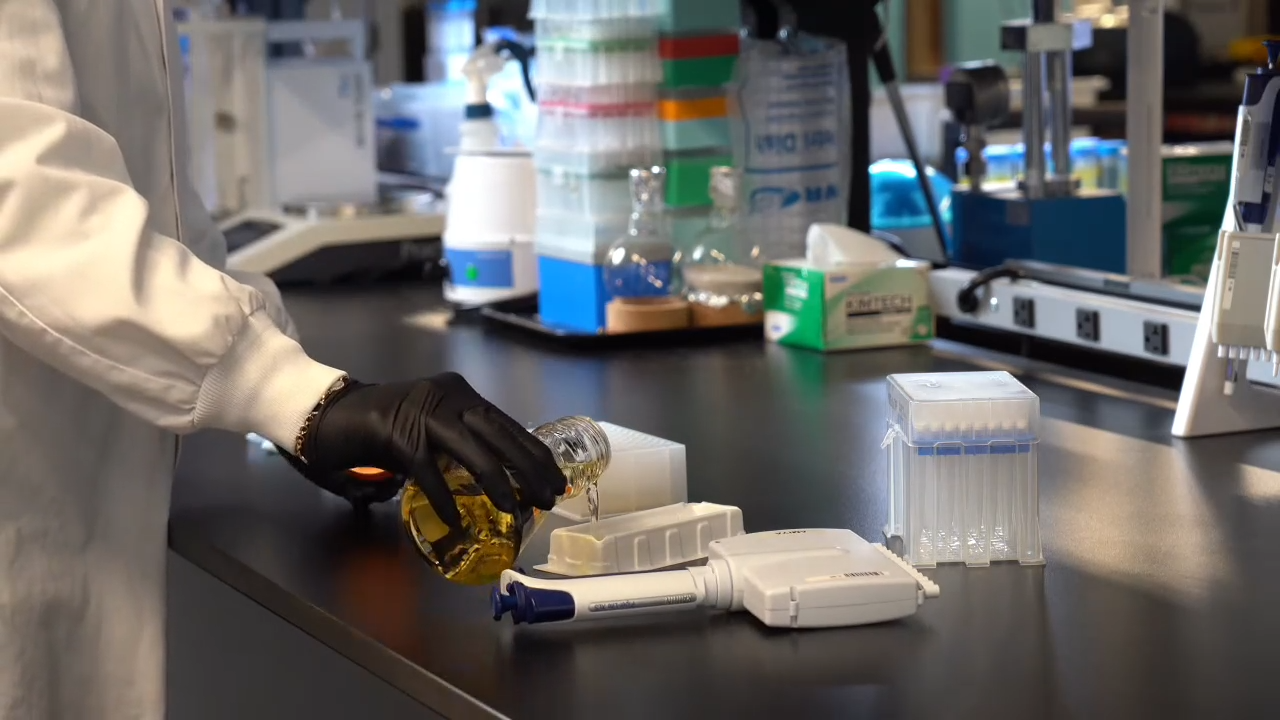
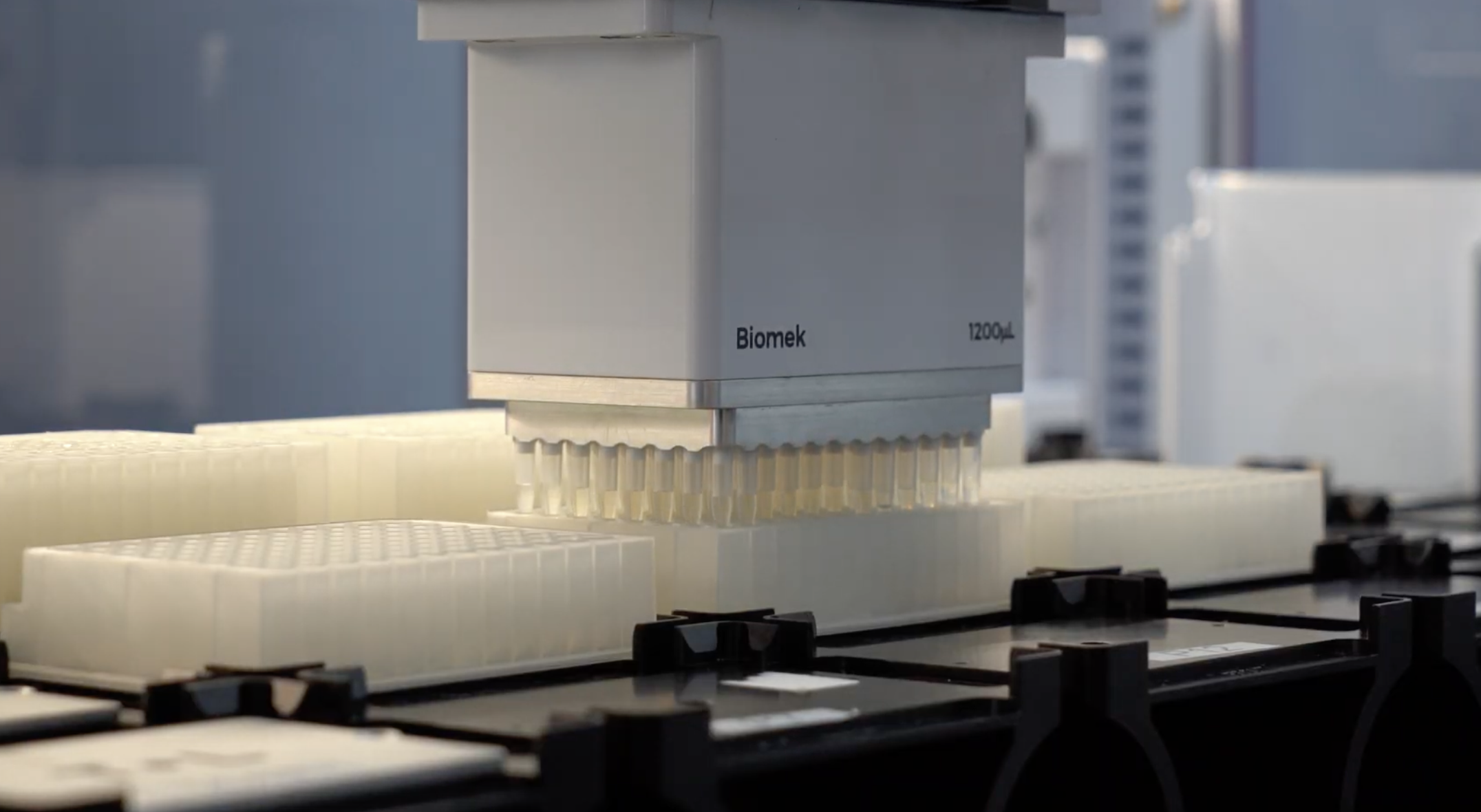
Testing conditions in a bioreactor, a controlled tank used to grow microorganisms under carefully managed conditions, would be the obvious approach, but reactor capacity is scarce. Runs go a few at a time and each round takes at least a week, so working through conditions one reactor run at a time would take years. Instead, we start in multiwell plates, where a unique fermentation is done in each well, and over the course of developing an ingredient, we are able to perform thousands of fermentations.
We set the plate wells up as a scale-down model: a miniature version of the fermentation we plan to run at scale, designed to identify factors likely to translate to a bioreactor. We specifically set dilution, fill volume, shaking speed, seal type and buffering so oxygen transfer and pH behavior better resemble a reactor, and we verify those settings against reactor runs.
Designing the screens
We do not select arbitrary factors to test with our scale-down model. Candidates come from both screening data and the available literature on the strain’s genus or relevant metabolic pathways. Each factor needs a viable food-grade source, and compatibility with reactor processing. In some programs, we know which target we are optimizing for and can go after its precursors directly. In others, we are optimizing a functional readout without knowing what is responsible, which makes factor choice harder to justify and the screens broader.
A single fractional factorial experiment design can screen on the order of 30 media factors in one plate, estimating main effects along with some information on factor interactions. Any factors that lead to a significant increase in the target efficacy through fermentation are tested again with higher resolution before they are confirmed in a reactor.
What we gain going from a well to a reactor
Plates help us narrow the search, but they cannot reproduce everything that happens in a bioreactor. A plate well has no active pH control and buffering is an imperfect fix, so pH drifts where a reactor would hold it. Similarly, unlike in a reactor where aeration comes from sparging, aeration in a well comes from geometry and shaking, which narrows the range we can reach. Ultimately, plates give fixed sampling points rather than continuous monitoring, so offer fewer opportunities to monitor the fermentation closely as it unfolds.
A plate tells us which factors matter and in which direction. We use reactors to confirm that starting point, and tune the factor concentrations accordingly.
What this means for our ingredients
A functional ingredient has to deliver enough of its component(s) to have an effect at an inclusion rate that’s workable for a pet food or supplement formulation. Increasing the amount of efficacy produced by fermentation is how we achieve this: higher potency means a lower dose is needed, and a lower dose is easier to incorporate into a food or supplement formulation.
Optimization also produces something less visible than higher potency, which is a defined process: a specific media composition and set of conditions. That definition enables batch-to-batch consistency and supports consistent manufacturing and reliable supply.
The particular combination of strain, media, and conditions behind a given fermentation is the output of a long sequence of experiments.
All of our ingredients are a product of this optimization process. Superculture® Pet Immune was optimized against an immune-relevant readout, and Superculture® Pet Oral against oral health function. Same pet food and supplement manufacturing constraints, but different definitions of better, and therefore different assays, candidate factors and recipes. We optimized both to deliver multi-fold improvements in activity relative to initial screening conditions, using only components that hold up at manufacturing scale.