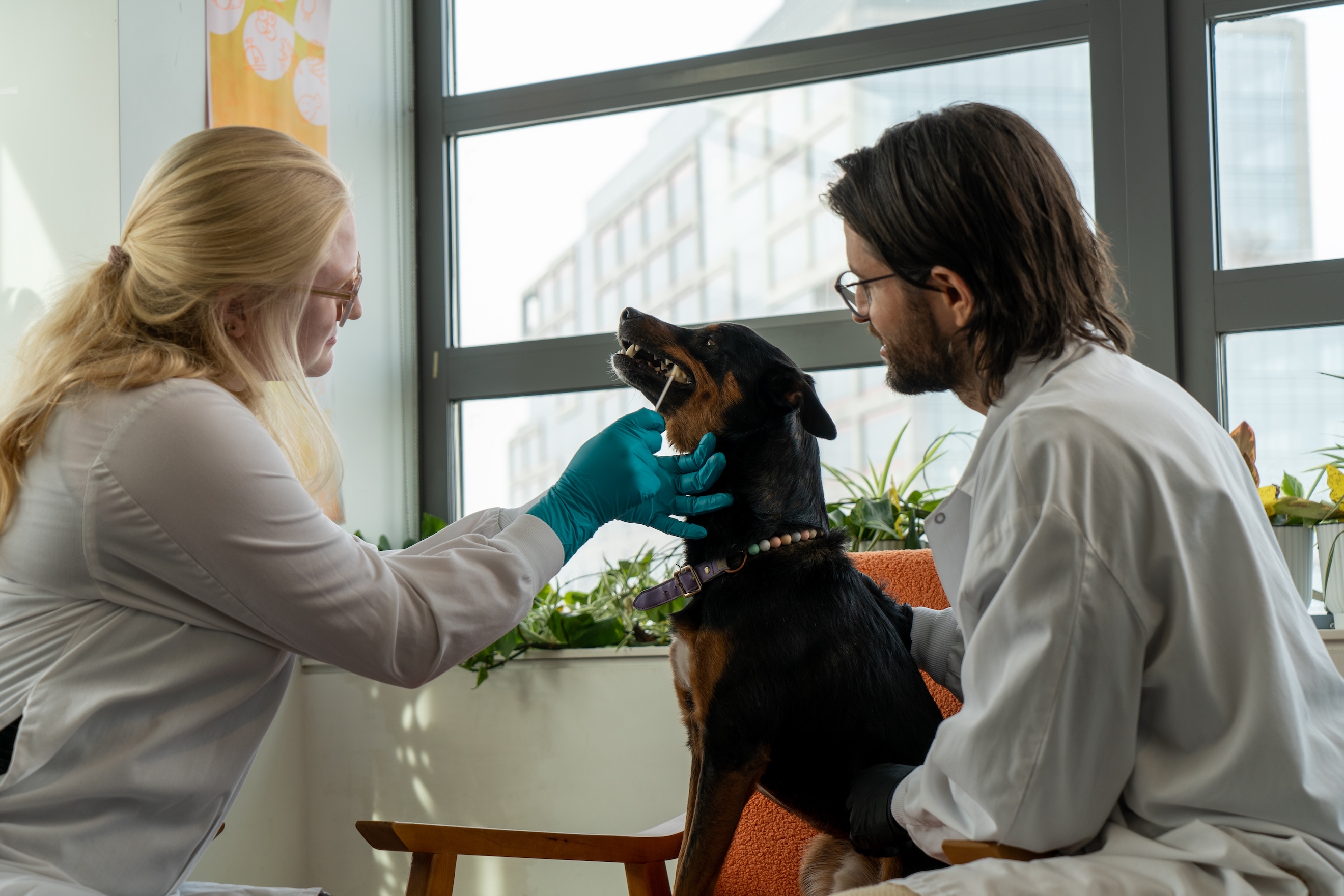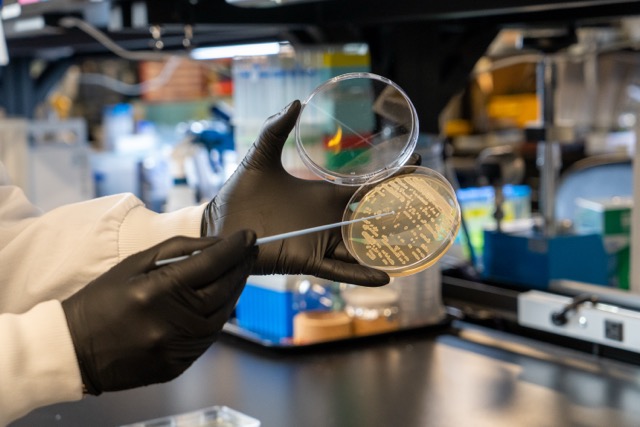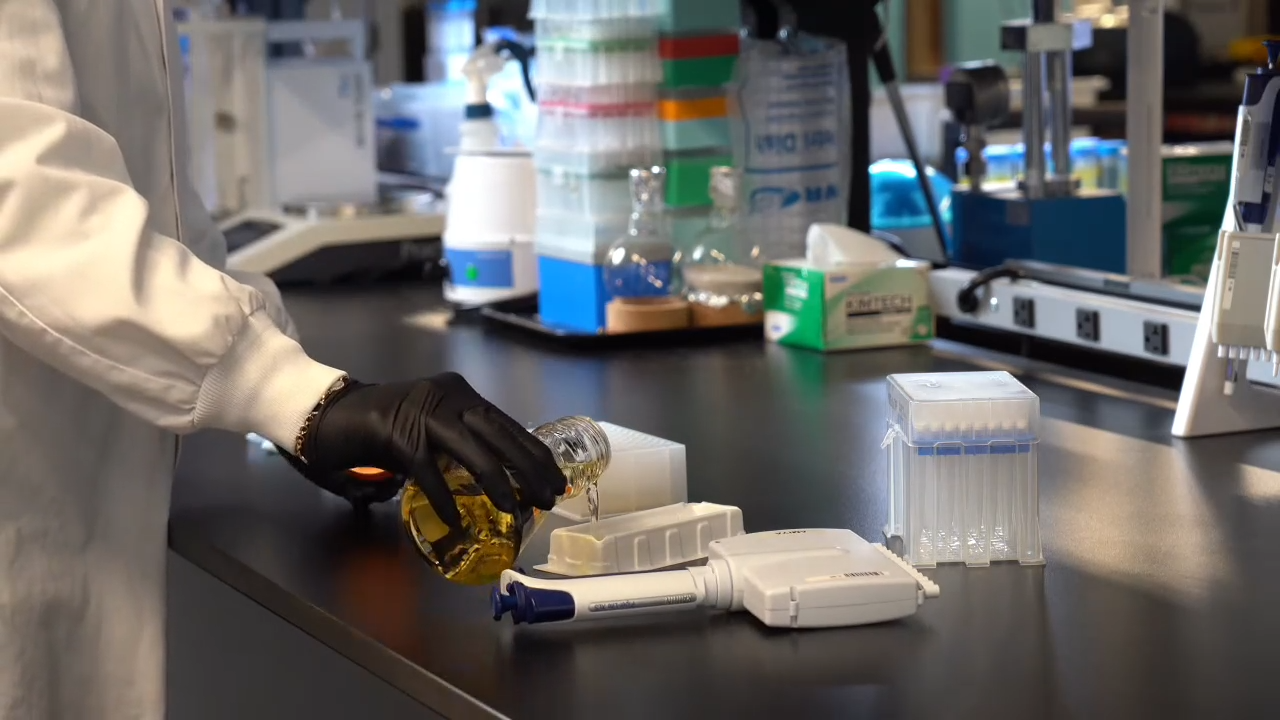
On one side of the wall: New York City, eight and a half million people, delivery trucks, the subway running underneath. On the other: a 38-bench R&D lab controlled tightly enough to grow microbial strains without a trace of contamination. Operating a state of the art R&D facility takes real discipline and meeting a range of federal, state, and city requirements. Before we screen a single microbe or design a single trial, our lab has to be clean, compliant, fully stocked, and running without interruption.
This is the first post in a series that takes you inside our R&D lab and processes. Our ~9,000 square foot HQ and R&D lab is based in the historic Brooklyn Navy Yard. Fun fact: the building we are based in was constructed in 1941, and served as a command and supply center for the North Atlantic fleet. This facility houses our entire R&D process and offices, covering our biobanking, discovery, screening, in vitro validation and lab-scale bioprocess development work. All of our commercial ingredient production happens at high-quality, vetted partner facilities across the US, and clinical research takes place with trusted third-party clinical research partners.
At Kingdom, I lead lab operations and ensure that the lab runs efficiently, safely, and reliably so our technical team can do their best work. There are four core parts of my role: quality control, safety and compliance, inventory management, and maintenance. Each one protects the integrity of our work, so our scientists have what they need to run reliable experiments.
Quality control
Contamination is the enemy of microbiology, so a lot of my work goes into preventing it before it starts.
That starts with the microbiological media for experiments and fermentations. Every batch is logged with a batch number and prep date, so results can be traced back over time. Before I release any batch to the team, it goes through a sterility hold and testing. If a batch fails, it is discarded, remade, and recorded, so we can tell the difference between a one-off and a pattern worth chasing.
We take great care of our lab environment to keep operations smooth. Most of our automation equipment is housed within clean rooms to reduce the possibility of any environmental contamination. Wireless sensors log temperature continuously across every fridge, freezer, and incubator in the lab, plus ambient conditions. If anything drifts out of range, the team is proactively alerted. This system protects our valuable biobank, reagents, and experimental samples, that are the result of many years of work. Our core instruments are maintained on a regular schedule, including autoclave calibration, pipette and balance calibration, and biosafety cabinet certification.
Safety and compliance
Running a lab in NYC means maintaining compliance with a variety of federal, state, and city regulatory bodies, from the EPA, FDNY, DSNY, DEP and more. Once a month, an external safety partner conducts a comprehensive inspection of our lab covering chemical hygiene, hazardous waste management, emergency preparedness, and fire safety. These monthly inspections identify gaps early and help us build a culture of continuous improvement.
Inventory management
Every experiment depends on having the right material on hand, from day-to-day consumables like pipette tips and tubes to chemicals and reagents like sugars and fermentation nutrients. Specifications matter as much as supply, since small changes in a supplier or even a lot of pipette tips can have a big impact on the accuracy and reliability of our high throughput screening data.
I source, restock, and keep backups of everything the team depends on. Today, we have ~200 individual laboratory consumables and ~800 reagents that I track carefully, keep in stock, and source from reliable suppliers.
Maintenance
Our instruments range from everyday workhorses like autoclaves, vacuum pumps, and magnetic stirrers to highly sensitive tools like bioreactors, HPLCs, automated liquid handlers, and a large automation workcell. We have more than 75 distinct pieces of complex technical equipment, so it’s a lot to keep track of! Keeping all of it well-maintained and operational is critical, as equipment downtime can severely impact our timelines.
Good documentation underpins our maintenance work: we keep a thorough equipment inventory, with manuals, vendor contacts, and a named responsible scientist for each instrument, which makes scheduling repairs and troubleshooting easier. For certain key instruments, we schedule preventative maintenance, keep them under service contracts, or set clear calibration intervals, so we proactively ensure instruments never break or fail.
What I’ve come to enjoy about lab operations over the last few years is the opportunity to solve problems firsthand. An immediate reflex when something stops working is to call the manufacturer and schedule service. Sometimes, though, the faster fix is our own. When the dishwasher failed and we needed clean labware that day, I pulled the manual, opened the unit, and traced the fault myself, shortening a multi-day service wait to an afternoon.
Despite all of our planning, labs are unpredictable. Equipment malfunctions, media gets contaminated, shipments arrive late. A major part of lab operations is adapting quickly when these challenges arise. When the lab is running smoothly, our team can give their attention to what matters most, the science.
The bottom line
Every Superculture® ingredient we develop depends on a lab that stays clean, compliant, and running without interruption.
In the coming months, you'll meet our technical team and go deeper into the work they're doing in our lab: from biobanking to high-throughput screening, strain selection, and bioprocess scale-up.
Come visit us next time you find yourself in New York City; we’d love to give you a tour of our lab and headquarters!